
Rotary Kiln Process for Producing Sodium Aluminate from Aluminum Dross and the Application of Refractory Materials
Overview
The process of producing sodium aluminate using aluminum dross as the primary raw material, with its advantages of high solid waste utilization and high product value-added, not only alleviates the environmental pressure caused by the stockpiling of aluminum dross but also provides a low-cost source of aluminum for sectors such as water treatment, building materials, and chemicals. It has gradually become a popular technological approach within the industry.The inherent components of aluminum dross, combined with the complex elements—such as alkali, sulfur, chlorine, and fluorine—generated by the combustion of limestone, soda ash, and pulverized coal used as raw materials, subject the refractory materials to severe chemical erosion and thermomechanical stress.This paper analyzes the sodium metasilicate production process from aluminum dross, rotary kiln operating conditions, and the mechanisms of refractory damage to explore refractory material configuration schemes that ensure stable and long-term kiln operation.
- Sodium Metasilicate Production Process from Aluminum Ash
1.1 Aluminum Dross
Aluminum dross originates from solid aluminum dross waste generated during the smelting process of ingot billets produced in the manufacturing of primary aluminum, cast aluminum, and recycled aluminum, as well as solid waste primarily composed of metallic aluminum and aluminum oxide generated in all aluminum industry production processes. Examples include cleaning residues from electrolytic aluminum ladles, furnace cleaning residues, and dust collected from flue gas purification systems in smelting furnaces.It primarily contains Al, Al₂O₃, AlN, NaCl, KCl, MgO, SiO₂,and other components.
1.2 Technical Approach and Process Flow
The core of the sodium metasilicate production process from aluminum dross lies in utilizing the alumina component in the dross to undergo a solid-state reaction with soda ash and limestone at high temperatures, producing soluble sodium metasilicate. This is then subjected to leaching and refining to ultimately yield the sodium metasilicate product. The specific process flow is as follows:
1.2.1 Raw Material Pretreatment and Batching
Aluminum dross is crushed and screened to a particle size of <2 mm, and metallic aluminum and impurities are removed; limestone is ground to 200 mesh (pass rate ≥90%); soda ash is crushed to a powdery state.The raw materials are blended in a ratio of aluminum dross : limestone : soda ash ≈ 40:30:18 (by mass), uniformly mixed in a mixer, and pressed into raw material pellets with a diameter of φ25–50 mm (compressive strength 2300–2500 N) to enhance air permeability and heat transfer efficiency within the kiln.
1.2.2 Preheating and Sintering
The raw material pellets are fed by a bucket elevator into a double-row suspension preheater, where they undergo countercurrent heat exchange with high-temperature flue gas (800–900°C) from the kiln tail, preheating them to 600–700°C and removing moisture while partially decomposing carbonates. After preheating, the material enters the rotary kiln, where it moves slowly forward.
The kiln head burners (multi-channel pulverized coal burners) provide the heat source; the temperature in the high-temperature zone of the kiln reaches 1150°C, where the material undergoes the sintering reaction:
Al₂O₃ + Na₂CO₃ → 2NaAlO₂ + CO₂↑
Side reaction: CaCO₃ decomposes into CaO, which reacts with SiO₂ and impurities to form low-melting-point silicates, thereby promoting sintering; AlN and Al in the aluminum ash are oxidized to Al₂O₃ and participate in the reaction, achieving the harmless treatment and resource recovery of the aluminum ash.
1.2.3 Clinker Cooling and Subsequent Processing
The sintered sodium metasilicate clinker (at a temperature of approximately 1100°C) is discharged from the kiln head and enters the cooling kiln, where air or water cooling reduces the clinker temperature to below 200°C, while recovering waste heat.
The cooled clinker is crushed and ball-milled, then leached with a dilute alkali solution, causing the sodium aluminate to dissolve into the solution; following desiliconization (by adding lime slurry), filtration, and evaporation concentration, solid and liquid sodium aluminate products are obtained.
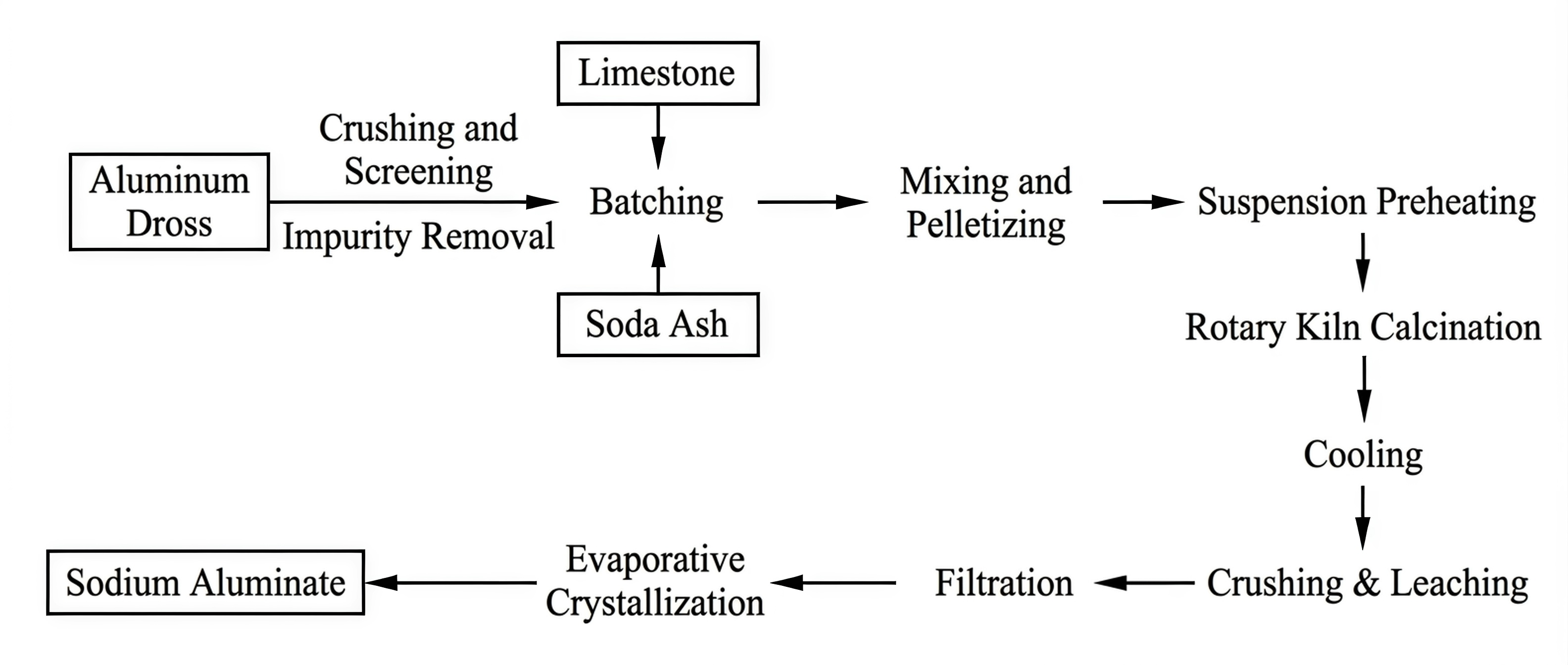
Figure 1: Process Flow for Producing Sodium Metasilicate from Aluminum Ash
- Major Production Equipment
The core of the aluminum dross-based sodium metasilicate production line is built around the rotary kiln, forming a complete thermal engineering system.
2.1 Rotary Kiln
The core calcination equipment, responsible for the continuous heating, reaction, and conveyance of the material. The maximum calcination temperature inside the kiln is controlled at 1150°C, which aligns with the solid-phase reaction temperature range required for sodium metasilicate.
2.2 Multi-Channel Burner
Located at the kiln head, this burner uses pulverized coal as its primary fuel. Through precise air supply control, it enables adjustable flame shape and temperature distribution, ensuring stable temperatures in the high-temperature zone.
2.3 Cooling Kiln
Arranged in parallel at the discharge end of the kiln head, this system rapidly cools clinker with temperatures above 1,000°C to below 200°C, while simultaneously feeding recovered hot air into the kiln head as secondary air to enhance fuel combustion efficiency.
2.4 Kiln Tail Flue and Suspended Preheater
Located at the tail end of the rotary kiln, this section collects high-temperature flue gas from the kiln tail and transfers heat to raw material in a suspended state, significantly reducing the exhaust gas temperature at the kiln tail and achieving energy savings and reduced consumption.
- Main Operating Conditions and Refractory Applications
Typical Chemical Composition of Aluminum Ash and Main Raw Materials
|
Elemental Composition (wt%) |
Aluminum Ash |
Limestone |
Soda Ash |
|
Al₂O₃ |
68.04 |
0.24 |
0 |
|
SiO₂ |
4.54 |
2.38 |
0 |
|
Na₂O |
2.71 |
0 |
58.5 |
|
CaO |
2 |
53.8 |
0 |
|
MgO |
4.49 |
1.15 |
0 |
|
Fe2O3 |
0.72 |
0.14 |
0 |
|
TiO₂ |
1.31 |
0 |
0 |
|
H₂O |
13.08 |
0 |
0 |
|
Cl |
3.11 |
0 |
0 |
|
CO2 |
0 |
42.29 |
41.5 |
|
Ratio |
52.95 |
11.02 |
36.03 |
Main Components of Kiln Charge/Atmosphere
|
Component |
Al₂O₃ |
SiO₂ |
Na₂O |
CaO |
MgO |
Fe2O3 |
TiO₂ |
Cl |
CO₂ |
|
Content |
38.74 |
2.86 |
24.19 |
7.51 |
2.69 |
0.43 |
0.75 |
1.77 |
21.07 |
As can be seen from the composition, the kiln is subject to severe erosion by molten materials and atmospheres containing strong alkalis, chlorine, and other substances.
3.1 Rotary Kiln
3.1.1 Preheating Zone
The preheating zone is located at the tail end of the rotary kiln, near the flue chamber, with a temperature range of 600–900°C.In this zone, the material has just entered the kiln from the preheater and is undergoing a gradual heating phase accompanied by decomposition. Large amounts of alkali metal volatiles containing sodium and potassium, as well as sulfur and chlorine, accumulate here with the flue gas. At the same time, fine material particles carried in from the kiln tail remain suspended in the gas stream for extended periods, creating a high-concentration, alkali-laden dust environment.
The primary form of damage to refractory materials in this area is chemical penetration and erosion caused by alkali metals. Volatiles such asNa₂O and K₂Oreleased within the kiln penetrate the refractory materials through their open pores and react with the Al₂O3and SiO2components to form products such as nepheline and garnet (Na/KAlSiO4), among others. The resulting volumetric expansion induces structural stress within the material, ultimately leading to cracking and spalling. At the same time, sulfates formed from small amounts of sulfur condense and crystallize within the pores in low-temperature zones, further accelerating structural degradation.
Under these operating conditions, refractory materials should possess excellent resistance to alkali attack, have the lowest possible open-porosity, and retain sufficient thermal shock resistance to withstand occasional temperature fluctuations.
Grade 1 or higher high-alumina bricks may be selected as the primary lining material; under severe operating conditions, sintered mullite bricks may be used, as they can effectively resist the penetration reactions of Na₂O and K₂O at this temperature, offer stable performance within this temperature range, and maintain controllable costs. Avoid selecting ordinary aluminosilicate materials with high silicon content, as they are susceptible to erosion by sodium carbonate and chlorine.
3.1.2 Transition Zone
Located between the preheating zone and the high-temperature zone, with a temperature range of 900–1050°C, this area experiences a rapid rise in temperature. Soda ash and limestone in the feedstock gradually decompose completely, and the sodium metasilicate reaction begins to occur.
In the transition zone, the combined corrosive effects of alkali metals, chlorine, and fluorine are significantly enhanced. Chlorine, fluorine, and their compounds react with the Al₂O₃and SiO₂components in the material to form volatile products, which destroy the material’s crystalline structure, causing continuous “vaporization” and loss—manifesting as a loose, porous structure;They form low-melting phases with the alkaline oxides in the material, directly melting and eroding the material. At the same time, thermal stress caused by temperature fluctuations in this region leads to cracks in the refractory material, accelerating the penetration of corrosive media into the interior. This requires the material to possess resistance to alkali, chlorine, and fluorine corrosion, excellent thermal shock stability, and structural strength that does not significantly deteriorate at high temperatures.
Silica-mullite bricks, corundum-mullite bricks, or andalusite-based materials may be selected as linings for this zone. These materials have anAl₂O₃content of ≥70%, low porosity, and a stable crystalline structure, enabling them to withstand combined erosion by chlorine, fluorine, and alkali metals. They also possess good thermal shock resistance, allowing them to withstand frequent temperature fluctuations in this zone and prevent extensive spalling.
3.1.3 High-Temperature Zone
The high-temperature zone is the core reaction area of the entire rotary kiln, with a temperature range of 1050–1150°C. It is also the hottest area in the entire production line; this is where the material undergoes its final solid-phase reaction, and it is simultaneously the area subject to the most severe erosion and wear in the entire production line.
The high temperatures in this zone intensify the combined erosion caused by alkali metals, chlorine, and fluorine. Although the primary reaction is a solid-state reaction, it produces low-melting phases of sodium-calcium compounds that infiltrate and dissolve the crystalline structure of the refractory material, forming a metamorphic layer. At the same time, the continuous movement and scouring of the material constantly erode the surface layer that has already been weakened by erosion, creating a vicious cycle of “erosion–spalling–re-erosion.”This area places the highest demands on the high-temperature performance of refractory materials. The materials must maintain a stable crystalline structure at temperatures up to 1,150°C, avoid violent reactions with sodium, potassium, chlorine, and fluorine components, and possess excellent high-temperature strength and wear resistance to withstand the continuous scouring action of the clinker.
For the high-temperature zone, magnesium-aluminum spinel bricks and corundum bricks may be selected; under severe operating conditions, high-purity corundum bricks, chromium corundum bricks, and chromium-zirconium corundum bricks may also be used as the primary lining specifically designed to withstand high-chlorine atmospheres.At 1150°C, these materials exhibit extremely low reactivity with sodium and potassium oxides, producing virtually no low-melting-point compounds. Additionally, their dense structure and excellent high-temperature wear resistance enable them to effectively resist penetration by molten eutectic mixtures and erosion by clinker, making them the optimal choice for these operating conditions.
3.1.4 Cooling Zone
The cooling zone is located at the discharge end of the rotary kiln near the kiln head, with a temperature range of 800–1100°C. High-temperature clinker begins to cool here after passing through the high-temperature zone. At the same time, secondary cold air introduced at the kiln head comes into direct contact with the high-temperature clinker, causing frequent sudden temperature changes on the surface of the refractory materials, resulting in pronounced thermal shock.
The primary damage mechanism for refractory materials in the cooling zone is the synergistic effect of thermal shock spalling and mechanical wear. Rolling clinker continuously abrades the material surface, and the combined effects of alkali, sulfur, and chlorine erosion—which permeate the entire kiln—along with thermal shock lead to cracking and spalling of the material. Therefore, refractory materials in this area must possess excellent resistance to thermal shock spalling, high mechanical strength at both ambient and high temperatures, and the ability to withstand long-term material abrasion.
The materials used in the cooling zone may be the same as those in the transition zone, or alternatives such as phosphate-bonded high-alumina bricks may be selected, which can effectively withstand the alternating hot and cold conditions as well as wear and spalling.
3.1.5 Kiln Mouths
The kiln mouth area is located at both ends of the rotary kiln. Although temperatures vary slightly between the front and rear kiln mouths, the core operating conditions involve thermal stress caused by the abrasion of clinker or raw material entering the kiln, as well as temperature fluctuations. This requires refractory materials to possess excellent wear resistance and thermal shock resistance.
Mullite-based castables specifically designed for kiln mouths can be used; these may be reinforced with components such as corundum and silicon carbide to enhance performance. They are applied using a vibration-compaction method to form a monolithic lining that exhibits excellent thermal shock resistance and wear resistance.
3.2 Kiln Tail Flue Chamber
The temperature range in the kiln tail flue chamber is 700–950°C. As the outlet for the rotary kiln flue gas, a large amount of volatile components containing sodium, potassium, sulfur, and chlorine condense upon cooling here, adhering to the surface of the refractory materials and forming crystals. At the same time, high-speed raw material fines carried by the flue gas cause continuous erosion and wear on the materials.
The primary operating conditions in the flue chamber involve the condensation and crystallization of large amounts of volatile alkali metals, sulfur, and chlorine on the surface and near-surface layers of the material, as well as erosion and wear caused by high-velocity, dust-laden flue gas. As this is a critical component in sodium aluminate production systems, the refractory materials must exhibit excellent resistance to alkali erosion and wear, have surfaces that do not readily form crusts, and possess a dense structure that is resistant to penetration.
Consequently, the flue chamber can be constructed entirely of low-cement corundum castable or corundum-mullite castable; alternatively, Cr₂O₃, SiC, and spinel can be incorporated into these materials to enhance resistance to scaling and erosion.
3.3 Double-Row Suspended Preheater
The temperature in the suspended preheater gradually rises from 300°C to 700°C; its primary function is to dry and preheat the raw materials, with the material and gas flow moving in opposite directions.Alkali- and sulfur-containing flue gas flows at high speeds through the duct, and fine raw material particles carried by the gas stream cause continuous abrasion of the inner walls. In low-temperature zones, crystallization and expansion of alkali metal sulfates, as well as scaling, are likely to occur. Therefore, the materials must possess high medium-temperature strength, good wear resistance, and strong resistance to sulfate erosion.
In this area, materials such as high-strength alkali-resistant bricks and alkali-resistant castables can be selected; under severe operating conditions, anti-scaling castables can be chosen to extend service life.
3.4 Cooling Kiln
The primary function of the cooling kiln is to lower the temperature of sodium aluminate clinker and recover thermal energy. The internal temperature gradually decreases from 800°C at the feed end to 200°C at the discharge end. As the high-temperature clinker continuously tumbles and slides within the cylinder, it subjects the refractory materials to intense mechanical wear. At the same time, the frequent flow of cooling air causes frequent fluctuations in the surface temperature of the refractory materials.
Refractory materials are subjected to continuous sliding wear caused by large volumes of high-temperature clinker tumbling through the kiln, as well as thermal shock stresses resulting from temperature fluctuations during the cooling process. This requires the materials to possess excellent medium-temperature wear resistance, good thermal shock resistance, and structural stability over the long term.
For cooling kilns, high-alumina wear-resistant refractory bricks or high-alumina high-strength castables may be used; these can be combined with components such as silicon carbide and reinforced with heat-resistant steel fibers to enhance performance.
3.5 Burners
Multi-channel burners are suspended inside the rotary kiln, where they are subjected to direct abrasion from fly ash carried by high-speed gas flows, as well as permeation and corrosion from alkali, sulfur, chlorine, and fluoride compounds. At the same time, the burners face significant regional temperature fluctuations; the combined effects of thermal stress and corrosion cause the material to crack and gradually spall off.Refractory materials must possess excellent thermal shock resistance and resistance to erosion by alkalis, sulfur, chlorine, and other substances.
In the burner area, low-cement corundum castable or corundum-mullite castable can be used; Cr₂O₃and SiC components can also be incorporated to enhance performance.
Conclusion
The production of sodium aluminate from aluminum dross is one of the resource-recycling technical routes with both economic value and environmental benefits. The complex composition of aluminum dross and the high-chlorine, high-alkali, and fluorine-rich environment during the production process place high demands on the selection and properties of refractory materials.Considering the operating conditions and the properties of refractory materials, magnesium-aluminum spinel, corundum-based, and chromium/zirconium-containing materials demonstrate good adaptability in high-temperature zones. In medium- and low-temperature zones, high-alumina aluminosilicate wear-resistant materials can be selected based on a comprehensive evaluation of temperature, wear, and erosion resistance; configuring different materials for high- and low-temperature zones achieves a balance between service life and cost-effectiveness.